

In the world of industrial equipment, the choice between a direct - drive and a belt - drive sealing machine vacuum pump can significantly impact the efficiency, performance, and cost - effectiveness of your operations. As a trusted supplier of sealing machine vacuum pumps, I've witnessed firsthand the different requirements and preferences of our customers. In this blog post, I'll delve into the key differences between these two types of vacuum pumps to help you make an informed decision for your specific needs.
Working Principle
The fundamental difference between direct - drive and belt - drive vacuum pumps lies in how power is transmitted from the motor to the pumping mechanism.
A direct - drive vacuum pump has a motor that is directly connected to the pump's shaft. This direct connection eliminates the need for additional components like belts and pulleys. For example, in our AM370HPM - 5 Micro Vacuum Pump, the motor and the pumping mechanism are closely coupled. This design allows for a more straightforward transfer of power, resulting in a more efficient operation. The motor's rotational force is directly translated into the movement of the pump's internal components, such as the pistons or diaphragms, which create the vacuum.
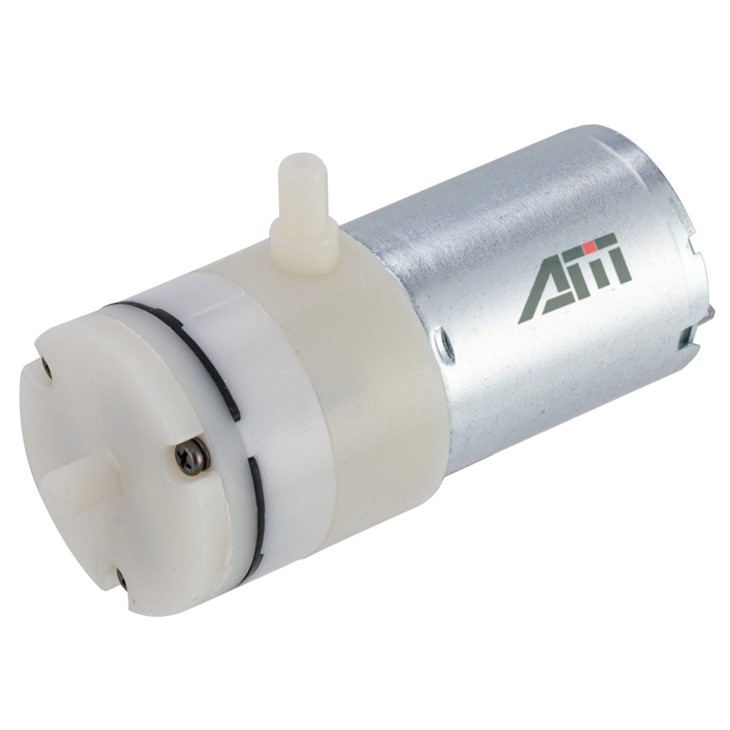

On the other hand, a belt - drive vacuum pump uses a belt and pulley system to transfer power from the motor to the pump. The motor rotates a pulley, which in turn drives another pulley connected to the pump's shaft via a belt. Our AM320HPM - 5 Micro Vacuum Pump can be configured as a belt - drive system in some applications. This setup provides a certain degree of flexibility in terms of speed and torque adjustment. By changing the size of the pulleys, the speed ratio between the motor and the pump can be altered, allowing the pump to operate at different speeds according to the specific requirements of the sealing process.
Performance Characteristics
Speed and Efficiency
Direct - drive vacuum pumps generally offer higher speeds and greater efficiency. Since there are no belts or pulleys to introduce power losses through friction, more of the motor's power is transferred directly to the pumping mechanism. This results in faster pumping speeds and quicker evacuation times. In applications where rapid vacuum creation is crucial, such as in high - volume sealing operations, a direct - drive pump like the AM370HPM Micro Vacuum Pump can significantly improve productivity.
Belt - drive vacuum pumps, however, may have lower overall efficiency due to the power losses associated with the belt and pulley system. The belts can slip under heavy loads, and the pulleys can experience wear and tear, which can further reduce the power transfer efficiency. However, the ability to adjust the speed through the pulley system can be an advantage in some situations. For instance, in processes where a slower, more controlled vacuum creation is required, the belt - drive pump can be adjusted to operate at a lower speed, providing more precise control over the vacuum level.
Noise and Vibration
In terms of noise and vibration, direct - drive vacuum pumps tend to be quieter and produce less vibration. The direct connection between the motor and the pump reduces the number of moving parts and potential sources of noise and vibration. This makes them ideal for applications where a quiet working environment is desired, such as in laboratories or clean rooms.
Belt - drive vacuum pumps may generate more noise and vibration due to the movement of the belts and pulleys. The belts can slap against the pulleys, and the pulleys themselves can vibrate as they rotate. However, proper maintenance, such as regular belt tensioning and pulley alignment, can help reduce these issues.
Maintenance Requirements
Direct - drive vacuum pumps typically have lower maintenance requirements. With fewer components, there are fewer parts that can wear out or break down. There is no need to worry about belt replacement, tension adjustment, or pulley alignment. This can result in lower maintenance costs and less downtime for the equipment.
Belt - drive vacuum pumps require more regular maintenance. The belts need to be inspected regularly for wear and tear and replaced when necessary. The belt tension also needs to be adjusted to ensure proper power transfer. Additionally, the pulleys need to be checked for alignment to prevent premature wear on the belts. However, the ability to replace the belts and pulleys relatively easily can be an advantage in terms of cost - effective repairs.
Cost Considerations
Initial Cost
Direct - drive vacuum pumps usually have a higher initial cost. The direct - drive design often requires more precise engineering and manufacturing, which can increase the production cost. The advanced technology and the elimination of additional components like belts and pulleys also contribute to the higher price.
Belt - drive vacuum pumps are generally more affordable upfront. The belt and pulley system is a relatively simple and cost - effective way to transfer power, making these pumps a more budget - friendly option for some customers.
Operating Cost
Over the long term, the operating cost of a direct - drive vacuum pump may be lower. The higher efficiency of direct - drive pumps means they consume less energy, resulting in lower electricity bills. Additionally, the lower maintenance requirements can also save on maintenance costs and reduce downtime.
Belt - drive vacuum pumps may have higher operating costs due to their lower efficiency and higher maintenance requirements. The need for regular belt replacement and tension adjustment can add to the overall cost of ownership.
Application Suitability
The choice between a direct - drive and a belt - drive vacuum pump also depends on the specific application.
Direct - drive vacuum pumps are well - suited for applications that require high - speed, high - efficiency vacuum generation. They are commonly used in industries such as food packaging, where rapid evacuation of air from packaging containers is necessary to preserve the freshness of the products. They are also suitable for applications where a quiet and vibration - free operation is required, such as in medical equipment or semiconductor manufacturing.
Belt - drive vacuum pumps are a good choice for applications that require more flexibility in terms of speed and torque adjustment. They are often used in processes where the vacuum level needs to be precisely controlled, such as in vacuum impregnation or some types of laboratory experiments.
In conclusion, both direct - drive and belt - drive sealing machine vacuum pumps have their own unique advantages and disadvantages. When choosing a vacuum pump for your sealing machine, it's important to consider factors such as performance requirements, maintenance needs, cost, and application suitability. As a leading supplier of sealing machine vacuum pumps, we can provide you with expert advice and high - quality products to meet your specific needs. If you're interested in learning more about our vacuum pumps or would like to discuss your requirements, please feel free to contact us. We look forward to working with you to find the perfect vacuum pump solution for your business.
References
- "Vacuum Pump Technology Handbook", Industrial Press Inc.
- "Principles of Vacuum Physics and Technology", John Wiley & Sons.