

Hey there! As a supplier of vacuum sealer machine pumps, I often get asked how these nifty devices handle different types of gases. It's a super interesting topic, and I'm stoked to share some insights with you today.
First off, let's talk about what a vacuum sealer machine pump is all about. In a nutshell, it's designed to create a vacuum by removing air and other gases from a sealed space. This is crucial for a bunch of applications, like food storage, medical equipment, and even industrial processes.

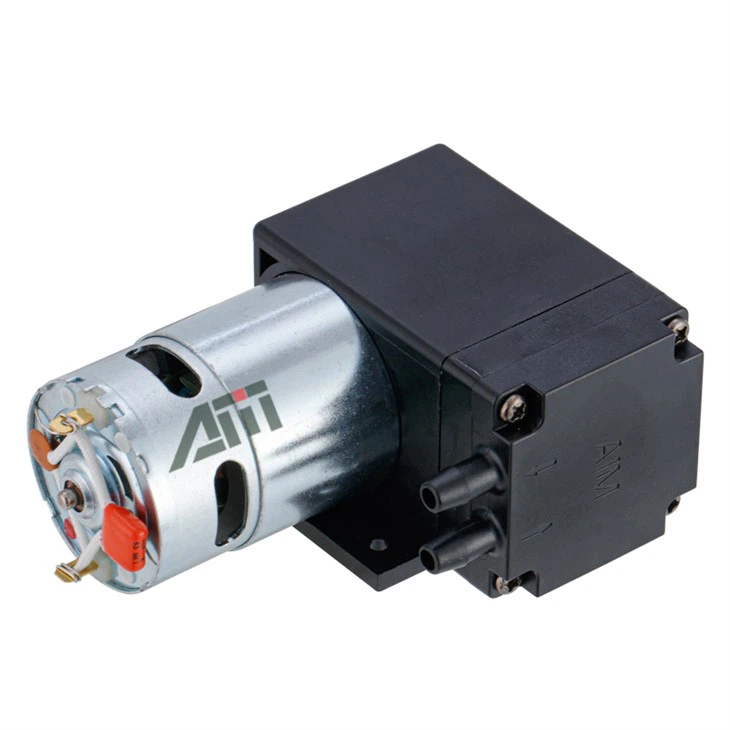
Now, different types of gases have their own quirks, and a good vacuum sealer machine pump needs to be able to deal with them effectively. Let's start with the most common gas we encounter – air. Air is a mixture of nitrogen (about 78%), oxygen (around 21%), and small amounts of other gases like argon, carbon dioxide, and neon.
When a vacuum pump starts its job on a container filled with air, it begins by creating a pressure difference. The pump sucks out the air molecules, reducing the pressure inside the sealed space. This is usually done through a series of mechanical or non - mechanical processes.
One of the most popular types of vacuum pumps for general use is the diaphragm pump. These pumps work by using a flexible diaphragm that moves back and forth. As the diaphragm moves, it creates a chamber that expands and contracts. When it expands, it draws in air (or other gases) from the sealed container. And when it contracts, it expels the gas out of the pump. Diaphragm pumps are great because they're relatively simple, reliable, and can handle a wide range of pressures.
For example, our Micro vacuum pump for storage box is a diaphragm - type pump that's perfect for creating a vacuum in storage boxes. It can efficiently remove air, which helps to keep your stored items fresh and protected from oxidation and pests.
But what about other types of gases? Well, some gases can be a bit more challenging to pump out. For instance, gases with high molecular weights or those that are chemically reactive need special handling.
Take carbon dioxide (CO₂) for example. It's a common gas that's produced in many industrial and biological processes. CO₂ is heavier than air, so it can be a bit more stubborn to remove. Some vacuum pumps are designed with special valves and materials to handle gases like CO₂ more effectively. These pumps might have a higher pumping speed or better sealing mechanisms to ensure that the CO₂ is removed as efficiently as possible.
In the medical field, we often deal with gases like oxygen and nitrogen in different applications. Our Micro vacuum pump for medical therapy is specifically designed to handle these gases in medical devices. It needs to be extremely reliable and precise because the safety and well - being of patients depend on it. The pump has to be able to create a consistent vacuum to ensure that the medical equipment functions properly.
Another interesting application is in the field of breast pumps. These devices use a vacuum to simulate the sucking action of a baby. Our DC mini vacuum pump for breast pump is designed to be quiet, efficient, and gentle. It can handle the small - scale vacuum requirements of breast pumps, providing a comfortable experience for the user.
Now, when it comes to handling different gases, the material of the pump components also plays a big role. Some gases can be corrosive, so the pump needs to be made of materials that can resist corrosion. For example, if you're dealing with gases like chlorine or sulfur dioxide, you might need a pump made of stainless steel or other corrosion - resistant materials.
The temperature also affects how a vacuum pump handles gases. At higher temperatures, gases expand, and their molecules move more rapidly. This can make it more difficult for the pump to create a vacuum. Some vacuum pumps are designed to operate in a wide range of temperatures, but in extreme cases, you might need to use additional cooling or heating systems to keep the pump working optimally.
In addition to the physical properties of the gases, the pressure and flow rate requirements also vary depending on the application. For industrial applications, you might need a pump that can handle high - pressure differentials and large flow rates. On the other hand, for small - scale consumer products like storage boxes or breast pumps, a lower pressure and flow rate might be sufficient.
So, as you can see, a vacuum sealer machine pump has to be a real jack - of - all - trades when it comes to handling different types of gases. It needs to be adaptable, reliable, and efficient.
If you're in the market for a vacuum sealer machine pump for your specific application, whether it's for food storage, medical use, or something else entirely, we're here to help. We've got a wide range of pumps that are designed to handle different types of gases and meet various requirements. Don't hesitate to reach out to us for more information and to start a discussion about your procurement needs. We're always happy to chat and find the best solution for you.
References:
- "Vacuum Technology Basics" by some industry experts
- Technical manuals of our vacuum sealer machine pumps